 Ultimate guide
How to Choose a Colonic Therapist: A Practical Guide
Last Updated: November 10, 2026
Quick Summary
To choose a colonic therapist, verify their accredited training, current professional registration and indemnity insurance, then confirm they screen for contraindications and follow strict hygiene protocols. Ask about costs in writing and walk away from anyone who dodges these questions or promises cures.
- A responsible colonic therapist takes a full medical history before any equipment is used.
- Sessions typically last around 30 to 45 minutes, though this varies by clinic and individual.
- Ask for the training school name, certificate, register entry and current insurance, and verify each separately.
- A clinic that does not ask about medication, surgery history or symptoms is not screening you properly.
- Be sceptical of clinics promising a cure, guaranteed results or a risk-free treatment.
Table of Contents
- What to Expect from Colonic Hydrotherapy
- Colonic Hydrotherapy Qualifications to Look For
- Colonic Hydrotherapy Safety and Clinic Hygiene
- Questions to Ask a Colonic Therapist Before Booking
- Transparent Costs and Comparing Providers
- Red Flags and Misleading Claims to Watch For
- Book Your Colonic Hydrotherapy Session
- Frequently Asked Questions
What to Expect from Colonic Hydrotherapy
Colonic hydrotherapy, also called colonic irrigation, is a procedure a colonic therapist performs by gently introducing warm, filtered water into the large intestine through the rectum to encourage waste evacuation.
At Colonic Irrigation - Colon Hydrotherapy Cleansing, we explain the process in full before anyone books, because informed consent starts with clear information.

The Initial Consultation and Medical History
The consultation comes first, and it is not a formality. A responsible colon therapist will take a full medical history before any equipment is used, asking about digestive symptoms, previous surgery, medication and existing medical conditions. This is how contraindications are identified. Be honest and complete in your answers; withholding information about a heart condition or recent bowel surgery, for example, could put you at risk. Expect the therapist to explain the procedure, its possible benefits and its risks, and to give you the chance to ask questions before you consent.
During the Treatment Session
During the session you lie on a treatment couch while the therapist introduces a small speculum and a thin tube. Water flows in gently and is then released along with waste, usually into a closed system that carries it away hygienically. Many people describe a feeling of fullness or mild cramping rather than pain. The therapist stays with you throughout, adjusting the flow and checking you are comfortable. Sessions typically last around 30 to 45 minutes, though this varies by clinic and by individual.
Colonic Hydrotherapy Qualifications to Look For
Training standards for colonic hydrotherapy vary between providers, so it is worth verifying qualifications yourself as the client. The practical question is not whether a therapist says they are qualified, but whether you can independently confirm it.
A well-qualified colon hydrotherapist will usually have completed an accredited training course that combines theory with supervised practice on real clients. Ask directly which awarding body or school issued the certificate, how many hours of practical training were required, and whether the course included anatomy, physiology, infection control and contraindications.
Accredited Training and Professional Registration
Accreditation means the course itself has been assessed against a published standard by a recognised body. The International Association for Colon Hydrotherapy describes certification requirements for therapists, which gives you a benchmark to compare against.
Registration is only meaningful if it is current. Ask when the registration was last renewed and whether it is conditional on continuing professional development. A therapist who cannot state their renewal date or CPD record is not demonstrating active registration, whatever certificate they show you.
How to Verify a Therapist's Credentials
Verification is straightforward if you know what to request. Work through these checks before you pay a deposit:
- Ask for the name of the training school and the qualification awarded
- Request a copy of the certificate and check the dates, the awarding body and the name on it
- Confirm whether the therapist is on a professional register, then check that register directly rather than relying on a screenshot or a logo on a website
- Ask how many supervised practice hours the training included and whether assessment was practical as well as written
- Ask whether the therapist holds current first aid and infection control training, and when it was last updated
- Ask for evidence of professional indemnity insurance and check the policy is current and covers colonic hydrotherapy
- Ask what the clinic's complaints procedure is and who handles a complaint if the therapist is the owner
- Check that the therapist can explain their scope of practice and when they would decline to treat
Insurance and complaints handling are the two checks most clients skip, and they are the two that matter most if something goes wrong. A clinic that cannot produce a current insurance certificate or a written complaints route is not a clinic to book with.
Watch out: a certificate on a wall proves a course was completed, not that registration is current or that insurance is in force. Verify each item separately, and treat a refusal to provide any one of them as a reason to walk away.
If a clinic cannot or will not answer these questions, treat that as your answer.
Colonic Hydrotherapy Safety and Clinic Hygiene
Safety in colonic hydrotherapy rests on two pillars: appropriate screening of the client and rigorous hygiene in the clinic. Neither can be assumed, so both are worth asking about directly.
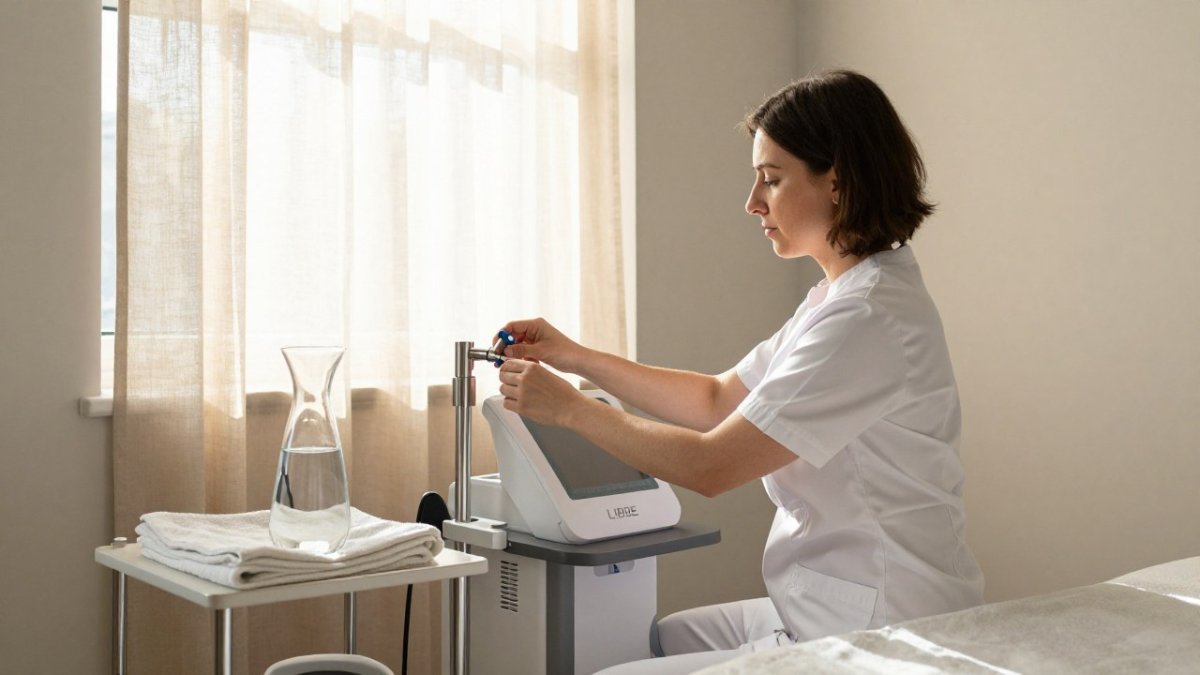
On hygiene, look for single-use equipment where appropriate, a closed system for waste evacuation, and clear cleaning protocols between clients. A hygienic apparatus setup should be visible or at least describable in detail. Infection control is not an abstract concern; it is the difference between a professional clinic and a casual one.
Contraindications and When to Seek Medical Advice
Colonic hydrotherapy is not suitable for everyone. The Mayo Clinic's guidance on colon cleansing advises speaking to a healthcare professional first and choosing an experienced practitioner with a good reputation, and notes that colon cleansing is not established as a necessary health practice and can carry risks.
A responsible therapist screens for contraindications before treatment, not during it. Use the checklist below as a prompt for your own medical history and as a test of whether the clinic screens properly.
Conditions that commonly warrant avoiding treatment or seeking medical advice first:
- Recent bowel surgery, abdominal surgery or a recent colonoscopy with biopsy
- Severe heart, kidney or liver conditions
- Uncontrolled high blood pressure
- Acute abdominal pain, unexplained bleeding or a sudden change in bowel habit
- Active inflammatory bowel disease, diverticulitis or a known bowel obstruction
- Severe anaemia or a bleeding disorder
- Pregnancy
- Active infection, fever or an acute illness on the day of treatment
Medications and circumstances to disclose:
- Blood thinners and other anticoagulants
- Immunosuppressants
- Regular steroid use
- Recent abdominal radiotherapy
- A history of fainting or low blood pressure during medical procedures
If you have a diagnosed medical condition, are pregnant, or are taking prescribed medication, speak to your GP before booking.
Watch out: a clinic that does not ask about your medication, surgery history or current symptoms before treatment is not screening you properly, however reassuring the consultation feels.
Questions to Ask a Colonic Therapist Before Booking
A short, direct list of questions will tell you more about a clinic than any marketing page. Ask them before you pay a deposit, and listen to how comfortably the therapist answers.
- What training did you complete, and who accredited it?
- How do you screen for contraindications?
- What hygiene and infection control measures do you follow between clients?
- What are the risks and side effects I should expect?
- What aftercare advice do you give?
- How do you record my medical history and protect my privacy?
Informed consent, privacy and professional boundaries are central here. You should be told what will happen, given the chance to decline, and assured that your patient records are kept securely. Our own colonic irrigation FAQ covers safety, preparation and benefits in more detail, and it is a sensible first stop before you call any clinic.
Transparent Costs and Comparing Providers
Cost is a legitimate part of the decision, and a clinic that is vague about fees is a clinic to approach with caution. Rather than quote figures that change, compare providers on what each fee actually includes: the consultation, the treatment session, any follow-up, and whether a course of treatments is recommended and priced separately. For a like-for-like view of what clinics charge, see our comparison of colonic irrigation costs, which sets out how quotes are typically structured so you can benchmark what you are offered.
| What to compare | What to ask | Why it matters |
|---|---|---|
| Fee structure | Is consultation included? | Avoids surprise add-ons |
| Course length | How many sessions recommended? | Affects total spend |
| Cancellation terms | Is the deposit refundable? | Protects your money |
| Aftercare | Is follow-up included? | Supports your results |
Red Flags and Misleading Claims to Watch For
Be sceptical of any clinic that promises a cure, guarantees a specific result, or claims the treatment is entirely risk-free. A systematic review published in Gastrointestinal Disorders examined colon-cleansing methods, and the broader medical consensus is that the practice is not established as necessary. Time's 2026 reporting on colon hydrotherapy notes that the procedure carries risks and will not address the root causes of digestive problems.
Other red flags include pressure to book a long course upfront, no consultation before treatment, reluctance to discuss risks, and claims that the treatment detoxifies the body in ways conventional medicine cannot.
Book Your Colonic Hydrotherapy Session
Choosing well comes down to evidence, not atmosphere. If you would like to see exactly what a private session involves before deciding, read our guide to what to expect from private colonic hydrotherapy.
At Colonic Irrigation - Colon Hydrotherapy Cleansing, our qualified hydrotherapist has over 17 years of experience and uses the gentle LIBBE open system in a private, hygienic clinic.
The challenge is finding a therapist you can actually trust with your health, and that starts with asking the right questions. You can view our colonic irrigation service and current offer or get in touch to arrange your appointment.
Frequently Asked Questions
What qualifications should a colonic therapist have?
A qualified colonic therapist should have completed accredited training in colon hydrotherapy, including both theory and supervised practical hours. Look for membership of a professional body and evidence of ongoing training. Ask about their scope of practice and whether they hold insurance. Do not rely on certificates alone; ask how their training was assessed and whether they have worked under supervision before practising independently.
How can I check whether a colonic therapist is properly trained?
Ask the clinic directly for the therapist's training provider, course length, and whether the course included supervised practice. Request details of any professional registration or certification and verify them with the issuing body where possible. If a clinic cannot or will not answer these questions, treat that as a warning sign.
What questions should I ask before booking colonic hydrotherapy?
Ask about the therapist's qualifications and supervised practice hours, the clinic's hygiene protocols and whether equipment is single-use, what happens during the initial consultation, and how medical history and contraindications are assessed. Also ask about informed consent, how your records are stored, and what aftercare advice is provided. Confirm the total cost upfront. These questions help you compare providers fairly and make an informed decision rather than relying on marketing claims.
What hygiene standards should a colonic clinic follow?
A reputable clinic should use single-use equipment where possible and follow clear infection control procedures. Ask how the apparatus is cleaned between clients, whether sterile equipment is used for invasive parts, and how waste evacuation is managed hygienically. The treatment room should be private and clean. Do not assume hygiene from appearance alone; ask directly about hygiene protocols and single-use equipment. A clinic that answers these questions openly is more likely to meet acceptable clinic standards.
Is colonic hydrotherapy safe for everyone?
No. Colonic hydrotherapy is not suitable for everyone, and it carries risks. Speak to a healthcare professional first, especially if you have a medical condition affecting the large intestine. A responsible therapist will take a full medical history, discuss contraindications, and obtain informed consent before treatment. If you have concerns, speak to your GP before booking.
What should I expect at a first colonic hydrotherapy appointment?
Expect an initial consultation covering your medical history, treatment goals, and any contraindications. The therapist should explain the treatment process, obtain informed consent, and give you a chance to ask questions. During the session, a gentle system is used to introduce filtered water into the large intestine, and waste is evacuated. Afterwards you receive aftercare advice. Ask what to expect from your specific session.