 Ultimate guide
The Benefits of Open System Colonic Irrigation
Last Updated: November 7, 2026
Quick Summary
Open system colonic irrigation lets you release waste naturally into a basin or toilet beneath you while a small single-use speculum delivers purified water, so you stay in control of your own bowel evacuation. It offers greater privacy and no suction, and clients often find it calmer and easier to tolerate than a closed system.
- A small, lubricated, single-use speculum is inserted gently; most people describe pressure rather than pain.
- The therapist stays nearby during evacuation but gives you privacy in an open system session.
- A 2016 study by Hsu and colleagues reported irrigation was safe and could improve IBS symptoms.
- Avoid booking if pregnant or with inflammatory bowel disease, severe heart or kidney disease, or uncontrolled high blood pressure.
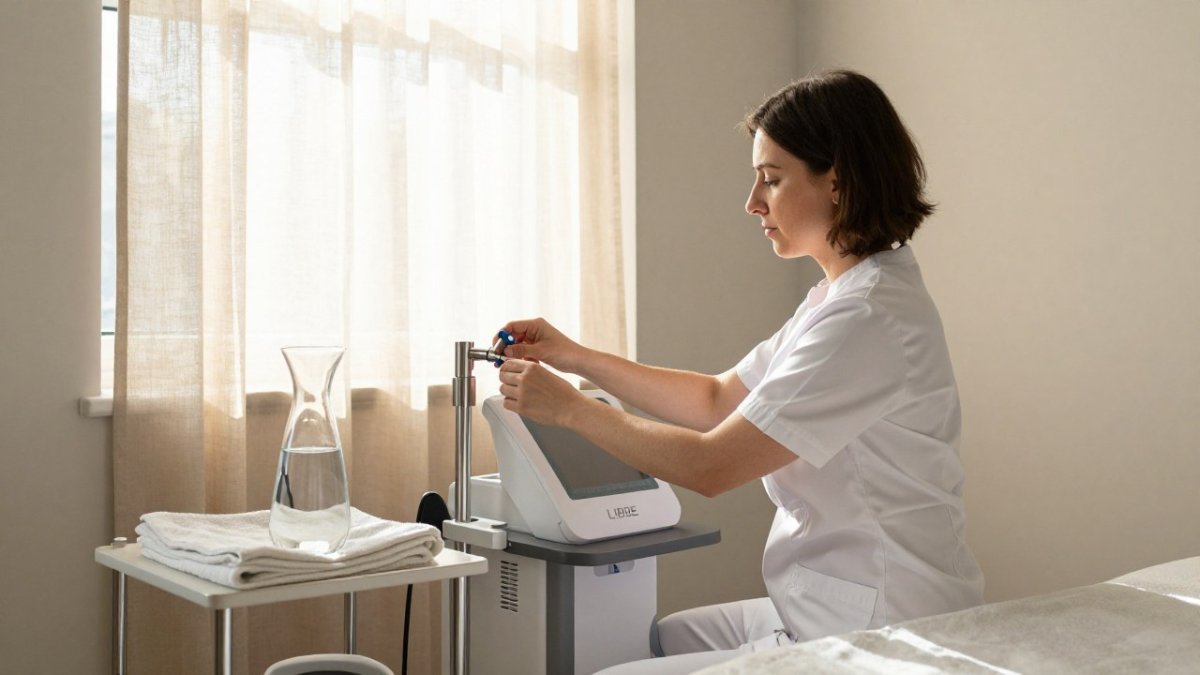
- Our qualified hydrotherapist uses the gentle LIBBE open system at our private Ealing clinic.
Table of Contents
- What Open System Colonic Irrigation Actually Involves
- Open vs Closed Colonic Irrigation: Which Suits You
- What Happens During Colonic Irrigation, Step by Step
- The Benefits of Open System Colonic Irrigation, Graded by Evidence
- Is Colonic Irrigation Safe? Risks, Hygiene and Contraindications
- Colonic Irrigation Session Length and What to Expect Afterwards
- Booking Your Colonic Hydrotherapy Session
- Frequently Asked Questions
What Open System Colonic Irrigation Actually Involves
Open system colonic irrigation is a method of colon hydrotherapy in which purified water is introduced into the large bowel through a small single-use speculum while you lie on a treatment couch, and waste leaves the body naturally into a basin or toilet beneath you. The gentle LIBBE open system is one approach to colonic irrigation: a small speculum is used for the initial insertion, and you stay in control of your own bowel evacuation throughout.
That distinction matters more than most guides admit. An open system does not suction waste out of you. It gives the lower digestive tract a gentle water infusion, then lets the bowel do what it already knows how to do.

Open vs Closed Colonic Irrigation: Which Suits You
The practical difference between the two comes down to equipment, control, and the level of therapist involvement. A closed system uses a disposable speculum with tubing that carries water in and waste out under the therapist's supervision, and you remain on the couch for the whole session. An open system uses a smaller speculum, and you release waste yourself into a basin as the urge arises.
| Feature | Open system | Closed system |
|---|---|---|
| Speculum | Small, single-use | Larger, with in/out tubing |
| Waste removal | You release naturally into a basin or toilet beneath you | Carried away through tubing by the system |
| Therapist involvement | Checks in, adjusts flow, gives privacy during evacuation | Continuous supervision and may include abdominal massage |
| Privacy | Higher during bowel evacuation; therapist nearby but not watching | Lower during evacuation; therapist present throughout |
| Comfort | May feel more natural and less intrusive for some | May feel more managed and reassuring for others |
| Equipment setup | Treatment couch with basin or toilet beneath; single-use speculum | Closed system machine with tubing; single-use speculum and tubing |
| Suitability | People who feel reassured by control and privacy | People who prefer the therapist to manage everything |
| Waste handling | You see and manage your own waste in the basin | Waste is contained and removed by the system |
If being left to release waste yourself sounds undignified, the closed system may suit you better. If having a tube managing your bowel movement sounds intrusive, the open system usually feels calmer. Some people also find the open system easier to tolerate because there is no suction and you control the timing of evacuation. Others prefer the closed system because the therapist can monitor everything continuously and adjust the flow more precisely.
A common pattern is that first-time clients are unsure which system they prefer until they experience one. If you have specific concerns about privacy, control, or comfort, ask the clinic which system they use and how they manage waste and hygiene. For a fuller walkthrough of what happens during a session, read our guide to what happens during your first colonic session.
What Happens During Colonic Irrigation, Step by Step
Here is the honest sequence, without the vagueness you will find elsewhere.
- Consultation. Your therapist takes a medical history, asks about medications, and confirms there are no contraindications.
- Preparation. You change into a gown in private and lie on your left side on the treatment couch.
- Speculum insertion. A small, lubricated, single-use speculum is inserted gently into the rectum. Most people describe pressure rather than pain.
- Water infusion. Purified water flows in slowly at low pressure. You may feel fullness or mild cramping.
- Bowel evacuation. As the urge comes, you release waste into the basin beneath you. The therapist stays nearby but gives you privacy.
- Repeat cycles. Infusion and release alternate for the session's duration, with the therapist monitoring how you are feeling throughout.
If you want a fuller walkthrough before you arrive, read our guide to what happens during your first colonic session.
The Benefits of Open System Colonic Irrigation, Graded by Evidence
Claims about the benefits of open system colonic irrigation need separating from the marketing. Some are supported by clinical research; others rest on what clients report.
Well supported. A study of a colonic irrigation system for irritable bowel syndrome by Hsu and colleagues (2016) reported that irrigation was safe and could improve abdominal pain, constipation and diarrhoea, with greater patient satisfaction. A 2026 review by Borghini and colleagues notes that transanal irrigation may help with constipation and faecal incontinence. Note the wording: may help, in specific conditions.
Reported by clients, not proven. They are not the same as clinical evidence.
Not supported. General detoxification claims, boosted immunity and increased energy have no reliable evidence base. The Mayo Clinic's guidance on colon cleansing states plainly that there is no evidence colon cleansing removes toxins or boosts energy or the immune system. Monash FODMAP reports that a review found the literature did not support colonic irrigation improving general wellbeing.
Be wary of any clinic promising detox, immunity or permanent constipation relief. Ask what the evidence actually shows.
Is Colonic Irrigation Safe? Risks, Hygiene and Contraindications
Colonic irrigation is not risk-free and is not suitable for everyone. The open system has specific safety considerations that differ from closed systems, particularly around hygiene and infection control.
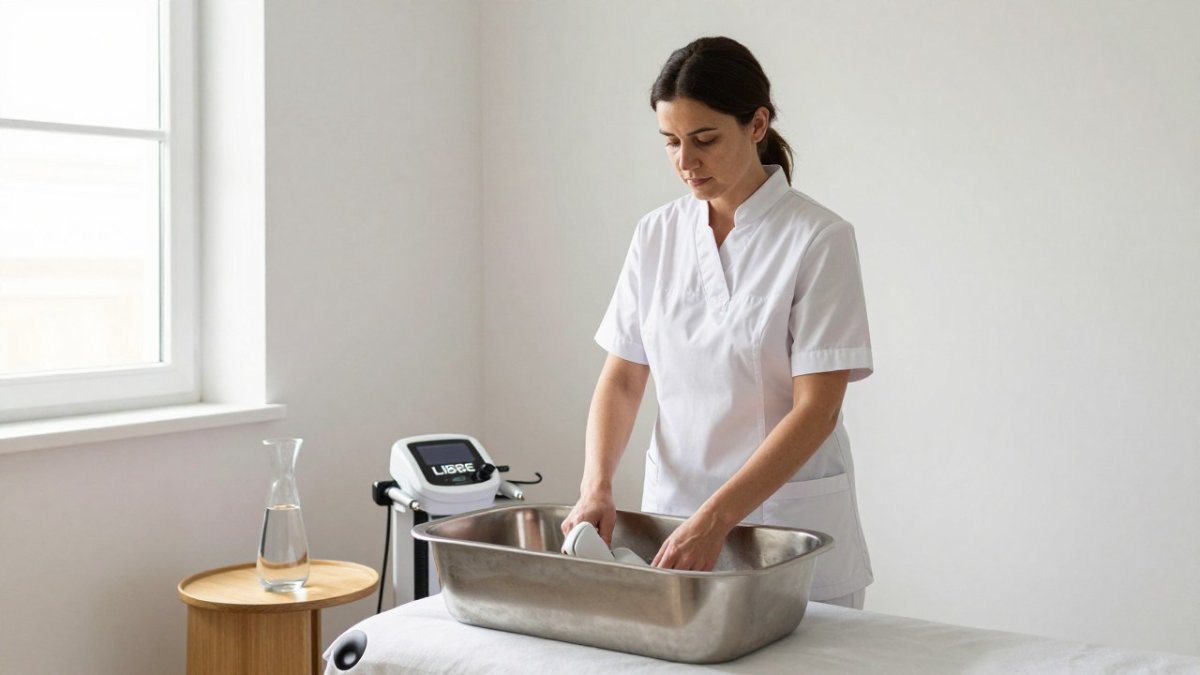
Open-system-specific hygiene and infection control. Because waste leaves the body into a basin or toilet beneath you rather than through closed tubing, the open system relies on rigorous cleaning and disinfection between clients. A reputable clinic should use single-use equipment for every client and follow clear hygiene and water quality procedures. Ask any clinic how it cleans its equipment and manages waste. Ask how the clinic cleans the equipment and manages waste; a vague answer is a red flag. Poor hygiene can lead to infection, and water quality matters because water is introduced into the bowel.
Common side effects can include temporary cramping, bloating and loose stools. More serious risks can include bowel perforation (rare but serious), electrolyte imbalance with frequent sessions, and infection where equipment hygiene is poor. Ask your therapist about the hygiene measures used.
Do not book without speaking to your GP first if you have:
- Inflammatory bowel disease (such as Crohn's disease or ulcerative colitis), diverticulitis or a known bowel obstruction
- Recent bowel surgery or an active hernia
- Severe heart or kidney disease
- Uncontrolled high blood pressure
- Are pregnant
- A history of eating disorders or significant electrolyte imbalance
- Active infection or fever
Certain medications, including diuretics and some heart medicines, affect electrolyte balance and need discussing beforehand. If you take any regular medication, check with your GP or pharmacist before booking. For a fuller list, see our colonic irrigation FAQ covering safety and contraindications.
A proper consultation covering your medical history, medications and contraindications is essential for safety.
Colonic Irrigation Session Length and What to Expect Afterwards
Appointment length will be confirmed when you book. Your first visit is usually longer than follow-up sessions.
Afterwards, some people feel lighter, while others feel tired for a few hours or notice mild bloating. Drink water and eat lightly for the rest of the day. Persistent pain, bleeding or fever need medical attention.
Our guide to what to do after colonic irrigation covers food, hydration and timing in detail.
Booking Your Colonic Hydrotherapy Session
If you have read this far, you likely want to know what happens next rather than another paragraph of theory.
With over 17 years of experience, our qualified hydrotherapist uses the gentle LIBBE open system at our private clinic in Ealing, in a calm and hygienic environment. If you would like to try the open system for yourself, our Colonic Irrigation £59 Offer is a straightforward way to book a first session.
Before you commit anywhere, read our seven things to know before booking colonic irrigation, then view our colonic irrigation service and current offer when you are ready.
Chronic bloating and sluggish digestion wear you down, and guessing at solutions wastes money. If you want a calm, hygienic setting with an experienced therapist who explains each step before it happens, book with Colonic Irrigation - Colon Hydrotherapy Cleansing. Our LIBBE open system, single-use equipment and 17 years of practice are here to support your digestive comfort. Get started with Colonic Irrigation - Colon Hydrotherapy Cleansing and book your session today.
Frequently Asked Questions
What are the benefits of open system colonic irrigation?
Reported benefits of open system colonic irrigation include relief from bloating and abdominal discomfort, easier bowel movements for some people with constipation, and a feeling of lightness afterwards. Mayo Clinic states there is no evidence that colon cleansing removes toxins or boosts energy or immunity, so treat detox claims with caution.
How does an open system differ from a closed system?
In an open system colonic irrigation session, waste leaves your body naturally into a basin or toilet beneath the couch, and you control the release yourself. A closed system uses a speculum with tubing that carries waste away directly. Open systems give you more control over privacy during evacuation, while closed systems offer the therapist closer monitoring. Both use water infusion.
Is colonic irrigation safe?
For many adults, colonic irrigation carries risks such as temporary cramping, bloating or loose stools. Safety depends on hygiene standards and screening. It is not suitable if you have certain heart, kidney or bowel conditions, or during pregnancy. Always disclose medications and medical history at consultation, and speak to your GP first if you have a diagnosed digestive condition.
Does colonic irrigation help with bloating or constipation?
Some people report less bloating and easier bowel movements after a session, Results vary, and lasting relief usually depends on diet, fibre intake, hydration and movement between sessions.
How long does a colonic irrigation session take?
Your therapist will confirm session timings when you book. First visits are usually longer than follow-up sessions. Arrive early, wear comfortable clothing, and allow time to use the toilet afterwards. Your therapist will confirm timings when you book.
Who should avoid colonic irrigation?
Avoid colonic irrigation if you are pregnant, have severe anaemia, uncontrolled heart or kidney disease, an active bowel infection, recent bowel surgery, or a known perforation or obstruction. It is also unsuitable for people with severe haemorrhoids or active inflammatory bowel disease flares. Some medications affect fluid balance, so disclose everything at consultation. If in doubt, ask your GP before booking, and choose a clinic that screens properly.